
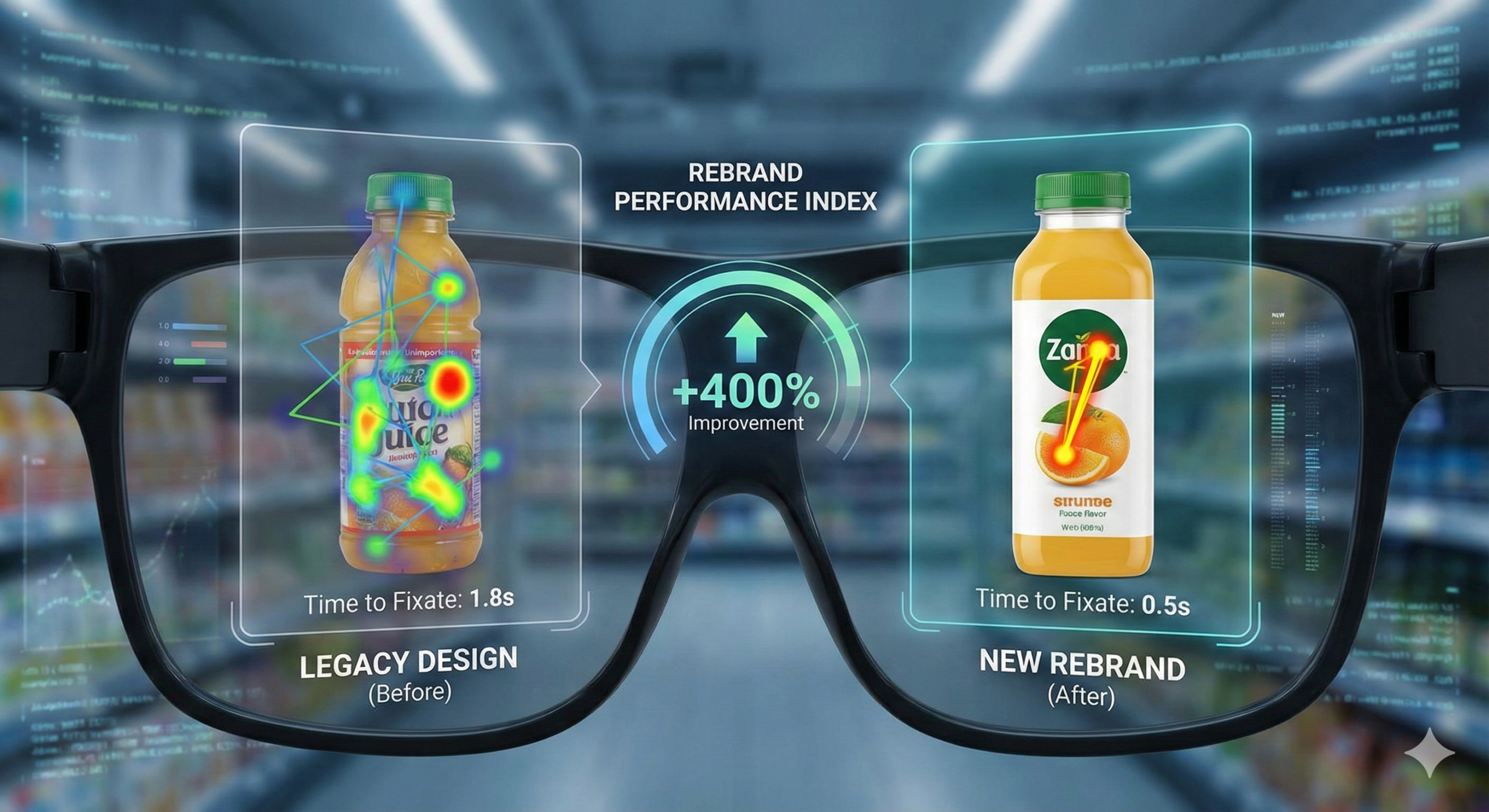
- Higher Noticeability
New designs should outperform legacy versions in time-to-first fixation. This is to say, the new design should be able to capture shoppers’ attention more quickly and in greater numbers.
- Faster Recognition
Shoppers should identify brand and flavour faster, not slower.
- Stronger Variant Differentiation
Better colour coding reduces confusion.
- Improved Claim Readability
Claims should be easier to find and understand.
- Preserved Brand Equity
Don’t change recognizable shapes, colours, or framing without purpose. And when multiple SKUs are involved, the new design should be at least as cohesive as the current design, meaning that the SKUs should all look like they belong together, and effectively create a larger billboard when placed side by side.
We’ve seen redesigns that look beautiful and modern, but perform worse because they removed crucial anchors that shoppers relied on.
Sources
Müller & Cornelissen (2020). Rebranding Strategy and Consumer Response.