
At Rich Insights, we’ve been involved in hundreds of shelf and design tests, and one behavioral insight is consistent across categories:
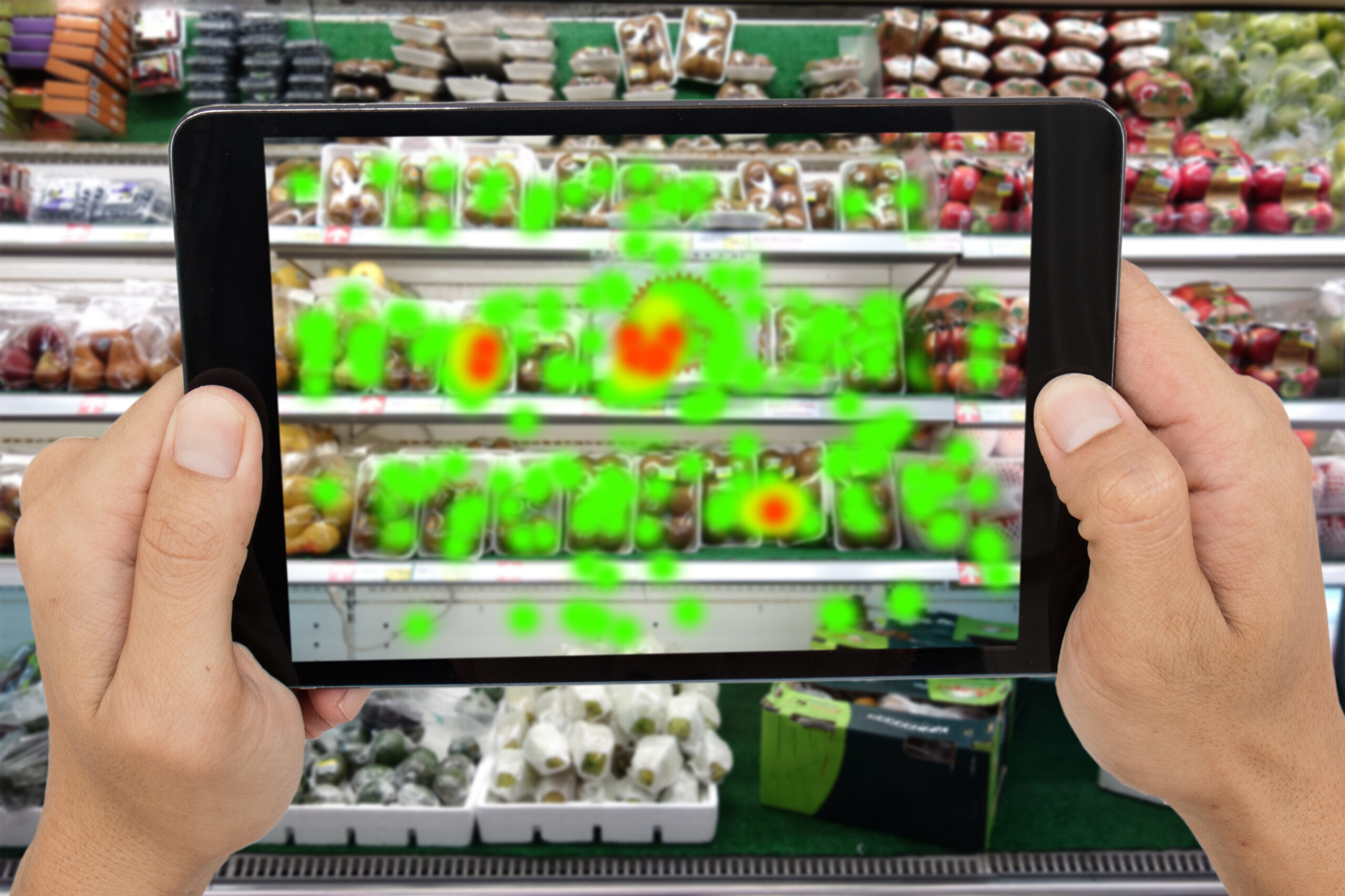
The first three seconds determine whether a shopper ever engages with your product.
What Shoppers Are Actually Doing in the First 3 Seconds
1. Scanning for Contrast
In beverages and salty snacks, especially, shoppers gravitate first to the strongest colour contrast.
This is why brands with clean, bright blocking (that contrasts with other packaging in the category) often have lower time-to-first-fixation scores. They are noticed more quickly on the shelf.
2. Looking for Category Landmarks
Shoppers want orientation.
This could be flavor cues, category callouts, or form factor; all this information helps shoppers process what the product is, which can be even more critical for newer categories of food.
3. Filtering Out Complexity
If a design looks dense or difficult to parse, shoppers move on.
This is a significant challenge in categories like bars, supplements, and RTDs.
Why This Matters for CPG Brands
If your product does not “win” the first three seconds,
you are competing with a disadvantage that no brand story can overcome.
Strategies to Win the First 3 Seconds
- One clear central visual
- A distinct and ownable colour
- Predictable architecture for your category
- Simplified text and fewer claims
- Use iconography when available instead of text
- Ingredient cues that stand out at a distance
These are what designs that consistently outperform have in common across Rich Insights studies.
Sources
Reutskaja, E., Nagel, R., Camerer, C.F., & Rangel, A. (2011). Search Dynamics in Consumer Choice.
Wedel, M., & Pieters, R. (2008). Eye Tracking for Visual Marketing.